
Protea Performance Center
Regenerative Treatment for Back Pain in Tempe
Patients often come to Protea Performance Center in south Tempe with low back pain that keeps returning, limits how they move through the day, or hasn't improved enough with physical therapy, medication, injections or ablation. Dr. Danny Clark evaluates the whole functional spinal unit, including the SI joint and the small nerves of the pelvis, then discusses whether ultrasound-guided PRP or bone marrow concentrate may be appropriate.
The discovery call is free, takes about 15 minutes, and comes with no obligation.
Low back pain
Why does my low back pain keep coming back?
There are several possible reasons. Low back pain can come from the facet joints, the discs, the SI joint, the ligaments that hold the spine stable, the muscles that support it, or nerves that produce similar symptoms, and more than one may be involved.
When only one source is addressed, symptoms can persist. Dr. Clark has described an inaccurate diagnosis as a common reason regenerative treatments don't work as hoped, so his evaluation looks at each possible source rather than only the most obvious one.
That is the idea behind the functional spinal unit: two vertebrae, the disc between them, the facet joints, and the multifidus muscles, spinal ligaments and fascia that keep the segment stable. Facet problems, disc herniations and instability all sit within that unit, so Dr. Clark looks at the whole segment rather than only the spot that hurts most.
Back and spine conditions we evaluate
- Facet joint dysfunction
- Disc-related pain and degenerative disc disease
- SI joint dysfunction (including postpartum)
- Lumbar and iliolumbar ligament laxity
- Multifidi atrophy
- Spinal ligament instability
- Superior cluneal nerve entrapment
Other sources of pain
Could my back pain be coming from the SI joint or a nerve?
It can. SI joint dysfunction and superior cluneal nerve entrapment can each produce pain that resembles a disc or facet problem, so Dr. Clark examines both specifically.
SI joint pain
The sacroiliac (SI) joint connects the base of your spine to your pelvis. When the ligaments that support it become loose, often after pregnancy or from instability, the joint can become irritated and inflamed. Because that pain can feel like facet joint pain, the SI joint is easy to overlook unless it is examined directly, and Dr. Clark considers it a frequently missed source of low back pain, particularly after pregnancy. Watch Dr. Clark on SI joint pain.
Superior cluneal nerve entrapment
The superior cluneal nerves are small nerves that can become compressed where they cross the pelvis. The resulting pain can resemble a disc or joint problem, so it is sometimes overlooked. Dr. Clark may use PRP or dextrose injections around the nerve with the aim of relieving the compression and irritation. Watch Dr. Clark on the superior cluneal nerve.
Radiofrequency ablation
Is there an alternative to radiofrequency ablation?
For some patients there may be. Radiofrequency ablation (RFA) burns the nerves that carry the pain signal from the facet joints. It can reduce pain, but it is not designed to change the joint itself.
In his video on RFA, Dr. Clark explains what the facet joints do, why he thinks RFA may not provide lasting relief for some patients, and how PRP and bone marrow concentrate, which contains your own cells, including stem cells, are used to try to support repair in the joint. Strengthening and supporting the surrounding ligaments and muscles is part of the plan too. Which approach suits you depends on your evaluation, and the research on these injections is still developing.
Your first visit
What happens at the first back pain visit?
Your first visit lasts up to 90 minutes. With back pain, several structures can produce similar symptoms, so much of that time goes to the history, the exam and diagnostic ultrasound.
Detailed history
What you've already tried, including injections or ablation, what helped, what didn't, and how the pain affects your day.
Pain-reproducing exam
Dr. Clark examines the facet joints, the SI joint, the spinal ligaments, the supporting muscles and the nerves, trying to reproduce your pain so he can tell which structures are involved.
Diagnostic ultrasound
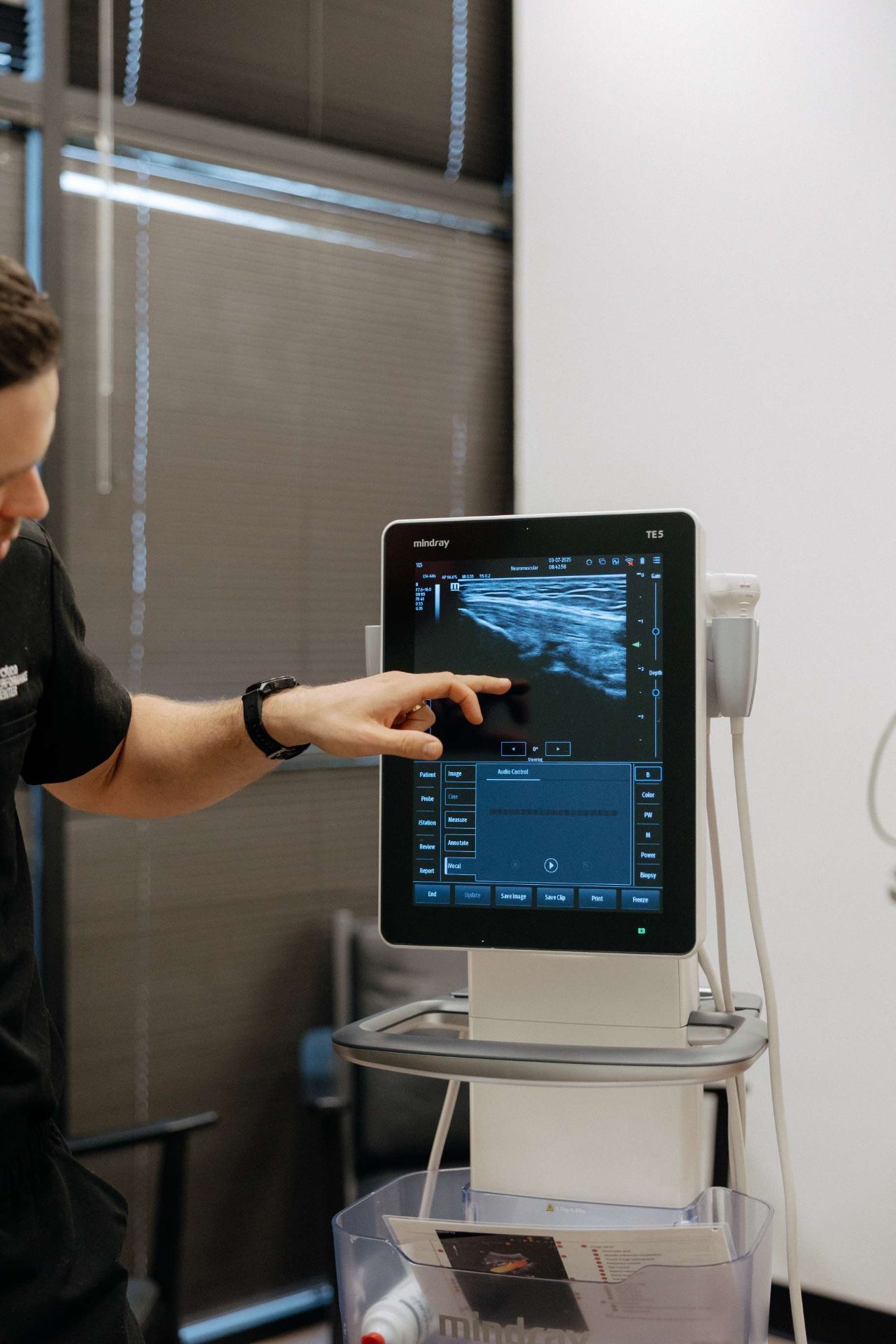
In-office ultrasound shows the ligaments, muscles and nerves in real time. You can watch the screen while Dr. Clark explains what he sees.
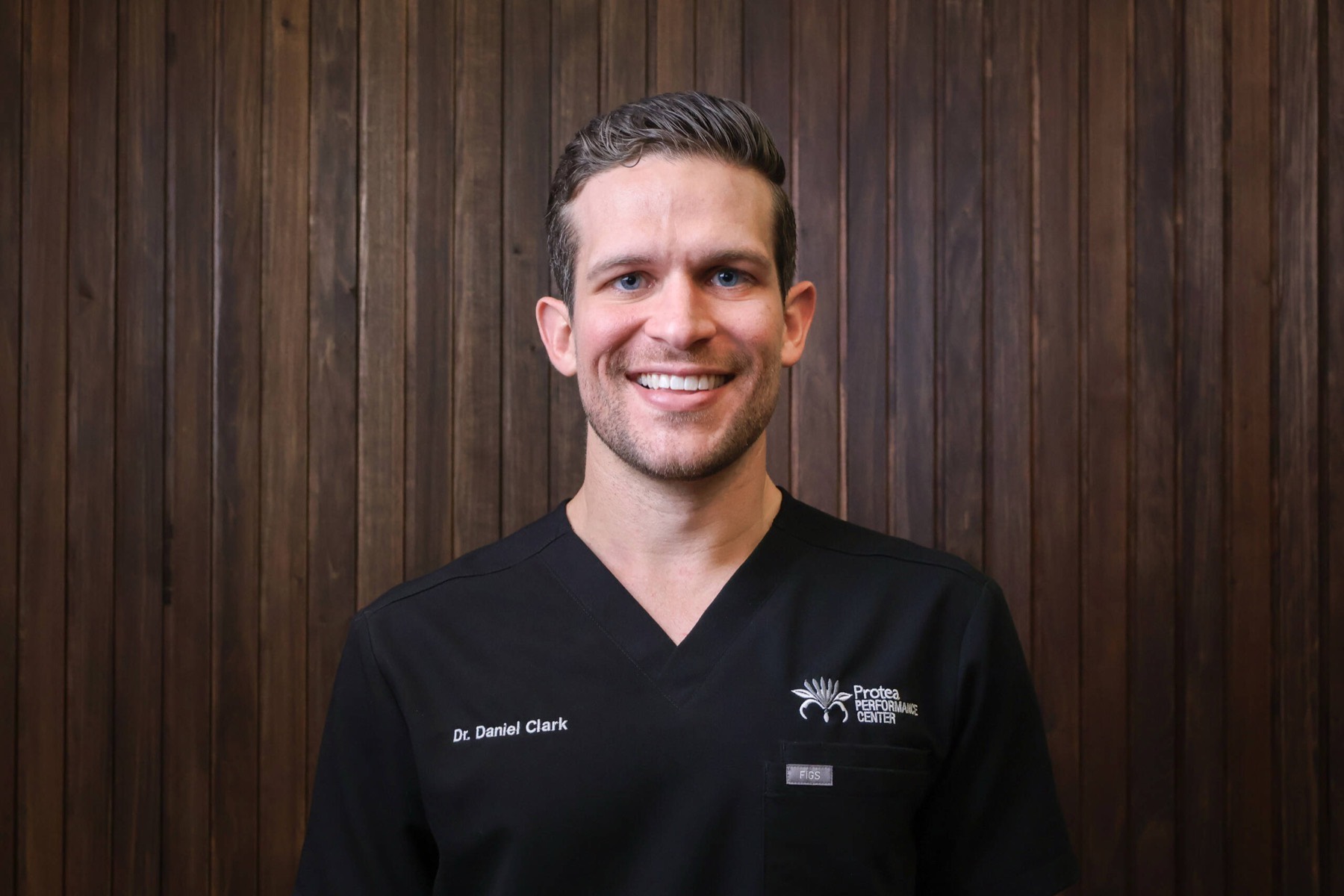
Dr. Danny Clark performs the evaluation, imaging and every procedure
Dr. Clark is a licensed Naturopathic Doctor and Director of Orthobiologics at Protea. He graduated with honors from Sonoran University of Health Sciences and completed a two-year residency in regenerative medicine. The platelet count of every PRP preparation is measured on an in-clinic hematology analyzer, which tells him what the preparation contains; it is a quality check, not a guarantee of results.
Recovery
How long until I notice a difference?
Response varies with what is being treated and with the person, so there is no set timeline. Every procedure includes a full re-evaluation at three months, with an exam and ultrasound.
You'll leave with recovery instructions tailored to your treatment, and the team coordinates with your physical therapist on loading and strengthening, since the muscles that support the spine are an important part of recovery. Procedures are done one at a time, and you and Dr. Clark decide together whether anything more is needed. He also discusses how chronic stress may affect recovery. For an overview of the whole process, watch The Complete Orthobiologics Patient Experience.
Keep exploring
Other conditions Dr. Clark evaluates
Videos and articles on joint pain and regenerative care · New patient information
Prefer we call you?
Talk to us about your back
The simplest first step is a free 15-minute discovery call. If you'd rather we reach out first, leave your details and a care coordinator will call you.
- First visit up to 90 minutes, with diagnostic ultrasound
- Every injection ultrasound-guided
- 3-month re-evaluation included with every procedure
This content is for education and is not medical advice. It does not replace an evaluation with a licensed provider, and no one should start, stop or change a medication on its basis.
Questions
Questions about regenerative treatment for back pain
What is the functional spinal unit?
It is the working segment of the spine: two vertebrae, the disc between them, the facet joints, and the ligaments, multifidus muscles and fascia that keep it stable. Dr. Clark evaluates the whole unit rather than a single structure.
Can the SI joint cause low back pain?
It can. SI joint dysfunction can cause low back pain, particularly after pregnancy, and the pain can resemble other spinal problems. That is why Dr. Clark examines the SI joint specifically.
What is superior cluneal nerve entrapment?
The superior cluneal nerves are small nerves that can become compressed where they cross the pelvis, causing low back pain that resembles a disc or joint problem. Dr. Clark may use PRP or dextrose injections around the nerve with the aim of relieving the compression and irritation.
Is there an alternative to radiofrequency ablation?
For some patients there may be. Radiofrequency ablation burns the nerves that carry the pain signal from the facet joints; it is not designed to change the joint itself. Dr. Danny Clark may discuss PRP or bone marrow concentrate for the facet joints and the ligaments and muscles that support them. Which option suits you depends on your evaluation.
Can PRP or stem cells help back pain?
They may be part of a plan once the source of the pain is clear. PRP and bone marrow concentrate, which contains your own cells, including stem cells, are used with the aim of supporting repair in the painful structures. Results vary and the research is still developing. Every injection is ultrasound-guided.
How much does regenerative treatment for back pain cost?
There is no single flat rate. Pricing depends on the biologic used and the complexity of the procedure, and the team can go over current pricing on your free discovery call.
How do I get started?
Book a free 15-minute discovery call. We are in south Tempe on Elliot Road near I-10, and patients come to us from Chandler, Ahwatukee, Gilbert, Mesa and Phoenix.
Start with a conversation
Schedule a free discovery call about your back
The call takes 15 minutes and there is no obligation. Tell us what's going on with your back, ask your questions, and we'll help you decide whether a full evaluation with Dr. Clark makes sense.