
Nutrition
The Sweetener Swap That Might Be Backfiring
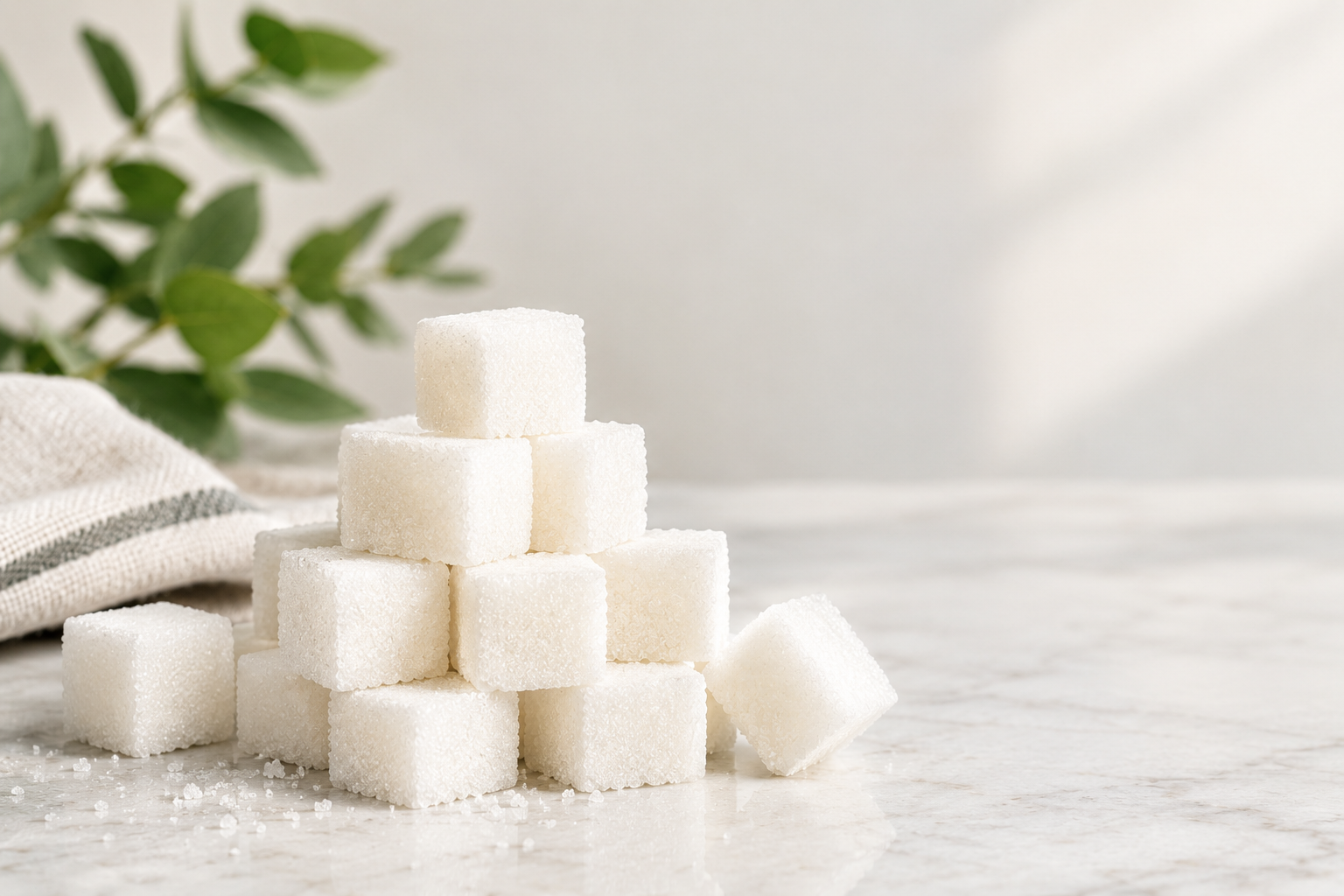
Are artificial sweeteners actually bad for you?
Have you ever stood in the grocery store staring at a package that says, "ZERO SUGAR," "KETO," "NO ADDED SUGAR," or "NATURALLY SWEETENED" and thought, Okay…but is this actually healthy? You are not alone.
And honestly, I understand the confusion. Nutrition labels have become increasingly creative, and there are now more ways to sweeten a food than most of us could keep track of. We have aspartame, sucralose, stevia, monk fruit, erythritol, allulose, sugar alcohols, fruit concentrates…the list goes on.
So, are artificial sweeteners bad for you?
The short answer is: not necessarily. But "sugar-free" doesn't automatically mean "healthier," either.
First, let's decode the label
One of the biggest things I encourage my patients to focus on is shifting the attention from the marketing on the front of the label and draw their attention to the nutrition label and ingredient list.
"Zero sugar" sounds straightforward, but it doesn't necessarily mean a food contains no sweeteners.
In the U.S., a product can generally be labeled "sugar-free" or "zero sugar" when it contains less than 0.5 grams of sugars per serving.
A product might contain a very small amount of sugar per serving, but if the serving size is unrealistically tiny, you may consume several "servings" without realizing it. This is why I like to flip the package over and look at the ingredient list and nutrition facts, rather than relying on the marketing on the front.
Instead, manufacturers may be using ingredients that provide sweetness without being counted as traditional sugar.
Artificial sweeteners: what's the deal?
Artificial sweeteners, also called non-nutritive sweeteners, are ingredients that provide a lot of sweetness with little or no calories.
Some common examples include:
- Aspartame
- Sucralose (Splenda)
- Saccharin
- Acesulfame potassium
There are also sweeteners that are technically derived from plants or other naturally occurring compounds, such as stevia and monk fruit.
The reason these ingredients became so popular is obvious: you can make something taste sweet without adding a significant amount of sugar or calories.
But this is where things get a little more nuanced.
Just because something doesn't raise your blood sugar like table sugar doesn't mean it has no effect on the body.
Do artificial sweeteners raise blood sugar?
For most people, artificial sweeteners do not cause the same rise in blood glucose that you would see from eating sugar.
That's one reason they can be useful for people trying to reduce sugar intake or manage blood glucose.
But your body is more complicated than your blood glucose meter.
Sweet taste interacts with the nervous system, taste receptors, insulin signaling, appetite regulation, and our learned associations between sweetness and energy. Research is still evolving in this area, and individual responses appear to vary.
Some individuals tolerate artificial sweeteners well, while others notice that when they consume a lot of artificially sweetened foods, they feel hungrier, have stronger cravings, bloating, diarrhea or simply don't feel as satisfied after eating.
What about your gut?
This is probably the area that gets the most attention.
Our gut microbiome is incredibly complex, and research suggests that some sweeteners may influence the composition or activity of gut bacteria.
Some studies have found changes in the microbiome or glucose response after consuming certain sweeteners, while other people show little to no meaningful change.
And clinically, some people report digestive symptoms when consuming large amounts of certain sugar substitutes:
- Bloating
- Gas
- Abdominal discomfort
- Loose stools
- Changes in bowel habits
This is especially important with sugar alcohols, which can be fermented by gut bacteria and, in larger amounts, have a laxative effect.
Let's talk about allulose
Allulose is one of the newer sweeteners you'll see more frequently, especially in low-carb and keto products.
It is technically a rare sugar, meaning it has a structure like sugar but is metabolized very differently.
It provides sweetness with very few calories and has a relatively minimal effect on blood glucose and insulin compared with regular sugar.
Allulose can be a useful alternative to sugar, particularly for someone trying to reduce added sugar. However, larger amounts can cause digestive symptoms in some people, including bloating, gas, or diarrhea. So once again, dose matters.
If you tolerate it well, there's no reason to panic when you see allulose on an ingredient list. But I also wouldn't interpret "made with allulose" as a free pass to eat unlimited amounts of that processed food.
What about erythritol?
Erythritol is a sugar alcohol that has become extremely popular in low-carb, keto, and "zero sugar" products.
It tastes very similar to sugar but provides very few calories and has little effect on blood glucose. Compared with some other sugar alcohols, erythritol is generally better tolerated from a digestive standpoint.
However, you may have seen headlines raising concerns about erythritol and cardiovascular health. This is an area where I think it's important to slow down and look at the actual research rather than the headline. Some observational and mechanistic research has raised questions about whether higher circulating erythritol levels could be associated with cardiovascular risk. But that does not prove that eating erythritol causes heart disease.
Does "natural" mean healthier?
This is another one of my favorite nutrition myths to unpack. Natural does not automatically equal healthy. Honey is natural. Maple syrup is natural. Agave is natural. And they can absolutely be part of a healthy diet. But they're still sources of sugar.
Agave is particularly interesting because it is relatively low on the glycemic index, largely because it contains a high proportion of fructose. The same principle applies to honey. It contains small amounts of beneficial compounds, but it still contributes sugar and calories.
"Natural" tells you where an ingredient came from. It doesn't necessarily tell you what it does in your body.
Sugar is still sugar
White sugar. Brown sugar. Raw sugar. Coconut sugar. Turbinado sugar. At the end of the day, the body doesn't care about the marketing language on the front of the package.
These are all forms of added sugar, and your body ultimately breaks them down into simple sugars that enter your metabolic pathways.
The sweetener to eat more of? Fruit.
This is where I think nutrition conversations sometimes get overly complicated. We spend so much time debating whether stevia is better than monk fruit or whether allulose is better than erythritol, while completely missing the bigger picture.
An apple contains sugar.
But it also contains:
- Fiber
- Water
- Vitamins and minerals
- Polyphenols
- Intact plant structure
When you eat a piece of whole fruit, you're not simply consuming fructose and glucose floating around by themselves. You're eating those sugars packaged inside a food that takes time to chew, digest, and absorb. Ultra processed foods are manufactured in a lab and do not necessarily behave this same way.
So…should you avoid artificial sweeteners?
If you're someone who drinks regular soda every day, switching to a diet soda can be a reasonable first step toward reducing your added sugar intake. Similarly, if you're reaching for a protein bar sweetened with stevia or erythritol instead of a candy bar, that may be a helpful swap.
Think of sugar substitutes as a bridge, not a permanent swap.
The goal isn't to spend the rest of your life replacing every sugary food with a highly processed, "sugar-free" version. The goal is to use these alternatives to help you step down from sugar and, over time, step away from ultra-processed foods altogether.
Ideally, your palate gradually becomes less dependent on intense sweetness, and foods that once tasted "not sweet enough" start to taste perfectly satisfying.
And if you notice that "sugar-free" foods leave you hungrier, more snacky, bloated, or constantly craving something sweet, that's useful information. Your body may be telling you that this swap isn't helping you move toward the bigger goal.
My approach: don't obsess over the perfect sweetener
I don't think most people need to spend their lives worrying about whether stevia, monk fruit, allulose, or erythritol is the "healthiest" option.
Instead, I encourage my patients to ask a few simple questions:
1. What is this food replacing? If you're replacing a sugar-sweetened soda with a diet soda, that's probably a meaningful improvement. If you're eating three "zero sugar" cookies instead of one regular cookie because they're labeled healthy, maybe not.
2. How does it make you feel? Pay attention to digestion, hunger, cravings, and energy.
3. How processed is the overall food? A minimally processed food sweetened with a small amount of something is very different from a highly processed product containing 15 different ingredients.
4. Am I eating enough real food? This one is huge. Before worrying about the perfect sweetener, make sure you're getting enough protein, fiber, vegetables, fruit, healthy fats, and whole foods.
This content is for education and is not medical advice. It does not replace an evaluation with a licensed provider, and no one should start, stop or change a medication on its basis.