
Wellness
Chronic Stress & Hormones: Why Your Body May Feel "Stuck" in Survival Mode
At Protea Medical Center, many patients come to us feeling exhausted, anxious, burned out, or frustrated by symptoms they cannot fully explain. They may be struggling with fatigue, poor sleep, brain fog, hormone imbalances, weight changes, irregular cycles, chronic pain or a general sense that their body no longer feels resilient the way it once did.
Often, one of the biggest missing pieces is not a pill or quick fix. The root cause for some lies in chronic stress and nervous system dysregulation.
Your Body Was Designed for Survival
Stress itself is not inherently bad. In fact, the human body is remarkably well-designed to respond to short-term stress in order to keep us alive.
When the brain perceives a threat, it activates the body's stress response system, known as the HPA axis. This leads to the release of stress hormones like cortisol and adrenaline, increasing alertness, energy availability, reaction time, and focus. In true emergencies, this response is protective and necessary. The problem is not stress itself, the problem is the body's experience of stress without recovery.
From an evolutionary perspective, our bodies were designed to move through stress in cycles. When our ancestors encountered a threat, their nervous systems activated appropriately: stress hormones increased, the body mobilized energy, and they either fought, fled, or escaped the danger. Importantly, once the threat passed, the stress response completed its cycle. The body recognized safety again, allowing the nervous system to settle back into a state of rest and recovery. There was activation, resolution, and then recovery.
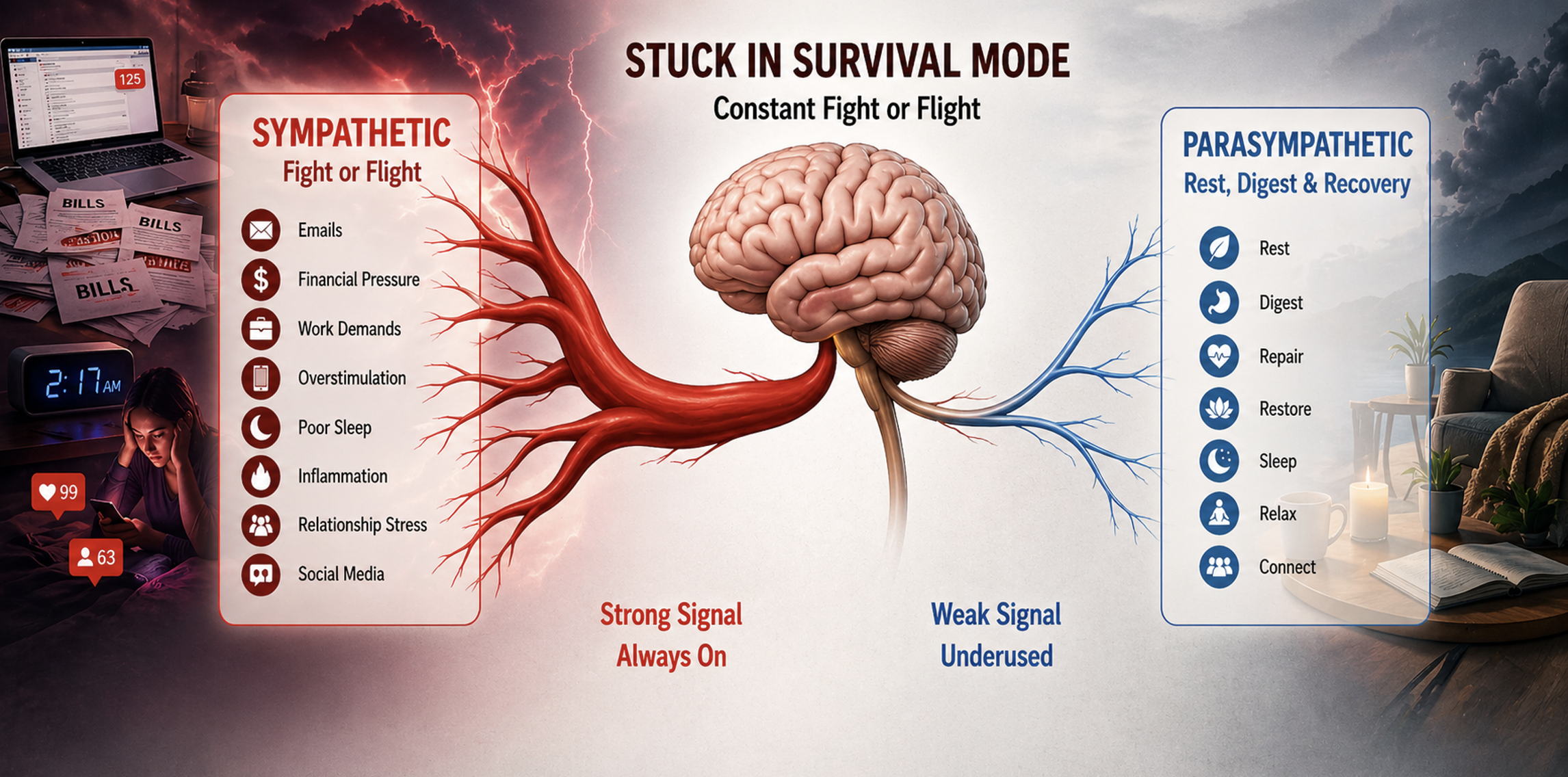
Modern life is very different. Many of today's stressors are chronic, psychological, and ongoing rather than short-lived physical threats. Emails, financial pressure, work demands, overstimulation, poor sleep, inflammation, relationship stress, social media, and constantly being "on" can signal danger to the nervous system. Unlike running from a tiger and eventually reaching safety, we never fully complete the stress cycle. The body remains in a prolonged state of arousal without a clear resolution or recovery period.
Over time, this constant activation can become exhausting for the body. The nervous system begins functioning as if danger is always present, even when there is no immediate threat. Instead of moving fluidly between stress and recovery, the body becomes stuck in survival physiology.
How Stress Impacts Hormones
One of the most important things to understand is that hormones do not function independently. The nervous system and endocrine system are deeply connected, constantly communicating with one another.
When the body perceives ongoing stress, it prioritizes immediate survival over long-term repair and hormone balance. From a biological perspective, this makes sense. In a true survival situation, the body's focus is not fertility, optimal metabolism, or restorative sleep. It is staying alive.
Over time, chronic stress can influence many hormonal systems, including cortisol production, thyroid function, estrogen and progesterone balance, ovulation, testosterone levels, melatonin production, and serotonin regulation. This is why stress-related symptoms can feel so widespread and seemingly unrelated.
Patients may begin experiencing fatigue, anxiety, sleep disturbances, mood changes, irregular menstrual cycles, low libido, brain fog, energy crashes, or difficulty recovering from exercise. Many describe feeling simultaneously exhausted and overstimulated. This is often referred to as feeling "tired but wired."
Cortisol Is Not the Enemy
Cortisol is frequently portrayed as "bad", but it is essential for human health. Cortisol helps regulate energy production, metabolism, inflammation, immune signaling, and the body's ability to adapt to stress.
The issue is not cortisol itself, but rather long-term dysregulation of the stress response system.
Under chronic stress, the body's natural cortisol rhythm may become disrupted. Some individuals may feel chronically anxious or agitated; others feel depleted and fatigued. Sleep quality often declines, mental clarity decreases, and resilience becomes harder to maintain.
Over time, the body becomes conditioned in this state and may have difficulty shifting out of stress physiology.
Stress Affects More Than Just Mood
Because the nervous system influences every major system in the body, chronic stress can affect much more than our thoughts and emotions.
Sleep and circadian rhythm are commonly disrupted, making it harder to fall asleep, stay asleep, or wake feeling rested.
Stress can also alter immune function. In some individuals, this contributes to increased inflammation and immune reactivity over time, while in others it may suppress resilience and slow recovery.
Chronic stress can affect blood sugar regulation, appetite, cravings, energy stability, and body composition.
Your body is not failing you.
Many symptoms associated with hormone imbalance are actually adaptive responses to prolonged stress and survival signaling. The body is often doing exactly what it was designed to do: protecting you.
Supporting Nervous System & Hormone Health
Healing from chronic stress is not about simply taking a vacation or resting for a weekend. Recovery happens when the nervous system begins receiving consistent signals of safety over time.
Small, repeated habits practiced consistently often have a greater impact on nervous system regulation than extreme or short-term interventions.
For many people, the brain has become highly conditioned to default into sympathetic "fight or flight" mode because that pathway has been reinforced day after day for years. The brain naturally favors the path of least resistance (much like a well-worn trail through the woods that becomes easier to walk every time it is used).
When stress, urgency, overstimulation, and constant productivity dominate daily life, the sympathetic pathway becomes the brain's most familiar route. Meanwhile, the parasympathetic "rest, digest, and recovery" pathway may become less accessible simply because it is practiced less often.
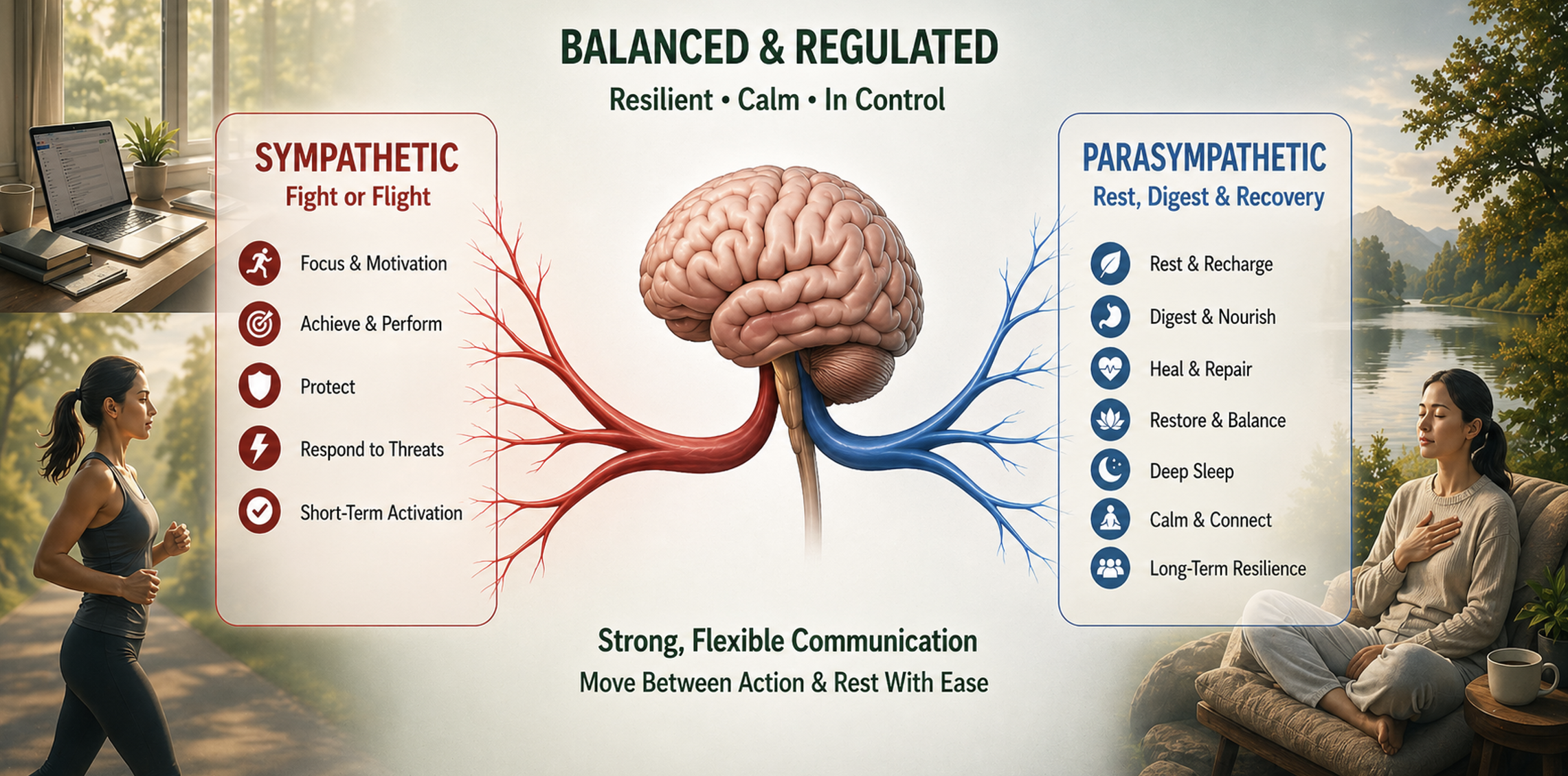
The good news is that the nervous system is adaptable. Through repeated experiences of safety, rest, regulation, and recovery, we can begin strengthening those parasympathetic pathways again (essentially carving out a new trail in the woods). Over time, the brain becomes more efficient at accessing calm, balance, recovery, and resilience rather than remaining stuck in survival mode.
Prioritize Sleep & Circadian Rhythm
Sleep is one of the most important regulators of hormone health, nervous system recovery, metabolism, and immune function. An irregular sleep schedule or chronic sleep deprivation can keep the body in a heightened stress state.
Ways to support sleep and circadian rhythm:
- Aim for a consistent sleep and wake time, even on weekends
- Get outside for natural sunlight within 30–60 minutes of waking
- Reduce bright overhead lighting and screen exposure at night
- Avoid excessive stimulation close to bedtime
- Create calming evening routines that signal safety to the nervous system
- Keep the bedroom cool, dark, and quiet when possible
Support the Body With Sustainable Movement
Exercise can be incredibly beneficial for hormone health and stress resilience, but more is not always better. Excessive or overly intense exercise without adequate recovery can further stress the nervous system.
Supportive movement may include:
- Walking outdoors
- Strength training with adequate recovery days
- Gentle mobility or stretching
- Yoga or restorative movement practices
- Low-impact cardiovascular exercise
- Movement that leaves you feeling energized rather than depleted
Create Daily Moments of Parasympathetic Activation
The parasympathetic nervous system is the body's "rest and digest" state. Intentional practices that activate this system help communicate safety to the body.
Helpful practices may include:
- Slow, diaphragmatic breathing
- Meditation or mindfulness practices
- Prayer or reflective quiet time
- Spending time in nature
- Gentle stretching
- Activities that create a sense of joy, creativity, or calm
Support Blood Sugar Stability
Blood sugar fluctuations can act as an additional stressor on the body and contribute to energy crashes, cravings, irritability, and cortisol dysregulation.
Ways to support blood sugar balance:
- Eat balanced meals with protein, healthy fats, and fiber
- Prioritize protein intake throughout the day
- Limit excessive intake of ultra-processed foods and refined sugars
- Pair carbohydrates with protein or fat for more stable energy
- Eat regularly enough to support consistent energy levels
Reduce Chronic Overstimulation
Many people live in a constant state of sensory and mental stimulation without realizing it. Constant notifications, multitasking, noise, and information overload can keep the nervous system activated.
Supportive strategies include:
- Taking breaks from screens and social media
- Limiting unnecessary notifications and alerts
- Building quiet or low-stimulation moments into the day
- Spending time outdoors
- Practicing single-tasking instead of constant multitasking
- Allowing time for rest without productivity attached to it
Prioritize Connection & Emotional Safety
Humans are biologically wired for connection. Safe, supportive relationships can help regulate the nervous system and improve resilience to stress.
Ways to support emotional wellbeing:
- Spend time with supportive friends or family
- Practice healthy boundaries in relationships and work
- Seek therapy or counseling when appropriate
- Engage in community, hobbies, or meaningful social connection
- Allow space for emotional processing rather than constant suppression
Consider Individualized Support
For some individuals, additional support may be beneficial depending on symptoms, health history, and lab findings. This may include targeted supplementation, nutrition support, medications, hormone evaluation, or other personalized interventions.
At Protea Medical Center, we take a whole-body approach to health by looking at how the physiology and lifestyle all work together to support long-term healing and resilience.
This content is for education and is not medical advice. It does not replace an evaluation with a licensed provider, and no one should start, stop or change a medication on its basis.